Lane-change or merging crash: who is at fault?
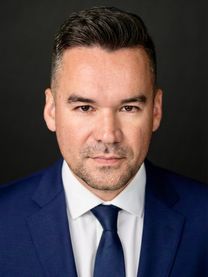
- Texas Attorney
- Yale B.A. · University of Houston Law Center J.D.
- Habla español
- Updated October 27, 2026
Usually the driver who left their lane. Texas Transportation Code § 545.060 requires drivers to stay within a single lane and not move out of it until it can be done safely, and § 545.104 requires a turn signal for every lane change. When two cars move into the same lane at once on a road with three or more lanes going one way, the car coming from the right must yield to the car coming from the left (§ 545.061), and fault can be shared under Texas proportionate responsibility.
Tell me what happened
Jimmy reads every request himself and will be in touch with you shortly.
The driver who changes lanes carries the duty
On any road with two or more marked lanes, Transportation Code § 545.060(a) requires a driver to stay as nearly as practical entirely within a single lane and not move from that lane until the move can be made safely. Section 545.103 says the same thing more broadly: a driver may not move right or left on a roadway unless the movement can be made safely. And § 545.104 requires a signal to change lanes.
Put together, the driver who leaves their lane is the one who has to make sure the space is clear. A driver holding a steady line in their own lane generally does not have to brake or swerve to make room. When a sideswipe happens because someone came over into an occupied lane, that driver is usually at fault, signal or no signal. A blinker is a warning, not a right-of-way.
What if we both moved into the same lane at the same time?
This happens all the time on wide freeways: one driver moves left and another moves right into the same middle lane. Texas has a specific tie-breaker. On a road with three or more lanes going one direction, a driver entering a lane from the right must yield to a vehicle entering the same lane from the left (§ 545.061). That rule does not end the analysis, since both drivers still had to move only when it was safe, so these cases often end with fault split between the drivers.
Who is at fault when merging onto the freeway?
A driver coming down an entrance ramp is changing from one lane into another, so the same duty to move only when it is safe applies to the merge. If the ramp has a yield sign, § 545.153 adds a stronger rule: a driver who passes a yield sign without stopping and then collides with a vehicle that had the right-of-way has prima facie failed to yield. The Texas Driver Handbook also says that where a sign shows your lane ends, you move over into the continuing lane.
Drivers already on the freeway have duties too. Every driver must keep a speed that is reasonable for traffic and conditions (§ 545.351) and enough following distance to stop safely (§ 545.062). A driver who speeds up to block a merging car, or who is following so closely that any merge becomes a crash, can share the fault.
Houston feeder roads have their own rule
Houston's freeways, from I-45 and the 610 Loop to Beltway 8, are lined with feeder roads, and many crashes happen where cars cross between the feeder and the ramps. Texas has a statute for exactly that spot. Under § 545.154, a driver on an access or feeder road has to yield to a vehicle entering the feeder from the freeway or leaving the feeder to get on the freeway. So a driver cruising down the feeder who hits a car coming off the exit ramp is often the one who failed to yield, even though the ramp traffic is the one changing lanes.
Cutting in, then braking: is the rear driver at fault?
A lane-change crash often looks like a rear-end crash: a driver cuts in, brakes, and the car behind hits them. Insurers like to treat every rear impact as the rear driver's fault for following too closely. But § 545.062 asks whether the rear driver kept a safe distance from the vehicle ahead, and a car that swerved into the gap a second before the crash was not the vehicle ahead in any meaningful sense. The question becomes when the lane change happened and whether it could be made safely. That is where video and vehicle data decide the case. Our page on rear-end crashes covers the following-distance rule in more detail.
Blind spots, trucks and the "I signaled" defense
"I signaled" is the most common defense in a lane-change case, and on its own it is not one. The statute requires both a signal and a safe move. A driver who signals and then moves into a car that was already there has still broken § 545.060.
Blind spots don't excuse the move either. A driver who cannot see whether a lane is clear has not confirmed that it is safe. That applies with special force to 18-wheelers, whose blind spots are large and whose drivers are trained to manage them; see truck blind spot and wide-turn crashes.
Some stretches of road prohibit lane changes completely, usually marked with solid double white lines, and the Driver Handbook tells drivers not to change lanes across them (§ 545.060(d) lets authorities post those restrictions). A driver who crossed them has a hard time arguing the move was safe.
How fault gets proven in a sideswipe
Two drivers in a sideswipe often tell mirror-image stories: "she came into my lane" and "he came into mine." The physical evidence usually breaks the tie:
- Where the damage is. Damage that starts at the front corner of one car and the rear quarter of the other shows who was moving into whom.
- Paint transfer and scrape direction.
- Dashcams in either car or in nearby cars and trucks. Some commercial trucks carry cameras.
- Event data recorders, which can show steering, speed and braking.
- Independent witnesses, who leave the freeway fast and are rarely found later without help.
When the crash happens on a Houston-area freeway and the cars can still be driven safely, Texas law requires drivers to move them off the main lanes to a safe place (§ 550.022). Before you move, if you can do it safely, take photos of the cars in place and of the lane markings. If anyone is hurt, call 911. If several cars were involved, see freeway pileups in Houston.
If the other side says it was your fault
Even if you moved lanes, you may not be the only one at fault. Under chapter 33 of the Civil Practice and Remedies Code, you can recover as long as your share of the fault is 50% or less, with your recovery reduced by your percentage. See what if the accident was partly my fault. Don't argue it with the other driver's adjuster. Once you hire us, we handle every call with the insurance companies, collect the evidence, and you talk with Jimmy directly by phone, text, email or video call, and in person when needed, wherever you are in Texas.
Other ways people ask this
Who is at fault in a lane-change accident in Texas?
Usually the driver who left their lane. Transportation Code § 545.060 says a driver may not move out of a lane until it can be done safely, so the driver moving over has to make sure the space is clear.
If I used my turn signal, am I protected?
No. A signal is required (§ 545.104), but it does not give you the right-of-way. The lane change also has to be safe.
Two of us moved into the middle lane at the same time. Who yields?
On a road with three or more lanes going one direction, the car entering from the right must yield to the car entering from the left (§ 545.061). Both drivers still had to move safely, so fault is often shared.
Does merging traffic have to yield to cars already on the freeway?
The merging driver is changing lanes, so the duty to move only when it is safe applies. If the ramp has a yield sign, § 545.153 makes a collision after passing it without stopping prima facie evidence of failure to yield. Freeway drivers must still drive at a safe speed and distance.
Who has the right of way on a Houston feeder road?
A car entering the feeder from the freeway, or leaving the feeder to get on the freeway. Drivers on the feeder road have to yield to them under § 545.154.
Someone cut me off and I hit them from behind. Am I at fault?
Not automatically. If the other driver moved into your lane too close for you to stop, the unsafe lane change can be the cause. Video and vehicle data usually settle it.
Do I have to move my car after a freeway crash?
In a metropolitan area, if the vehicles can be driven safely and no one is hurt, Texas law requires moving them off the main lanes (§ 550.022). If anyone is hurt, call 911.
Authority: Tex. Transp. Code § 545.060 (driving on roadway laned for traffic) · Tex. Transp. Code § 545.061 (driving on multiple-lane roadway) · Tex. Transp. Code § 545.104 (signaling turns; use of turn signals) · Tex. Transp. Code § 545.154 (vehicle entering or leaving controlled-access highway) · Tex. Transp. Code § 545.153 (stop and yield signs) · Tex. Transp. Code ch. 550 (§ 550.022) · Texas DPS — Texas Driver Handbook (DL-7)
Your next steps, and ours
Photograph the lanes and damage
If it is safe, photos of both cars in place, the lane lines and where each car was hit.
Call Jimmy
713-600-6233Free and confidential. You can talk with Jimmy directly, in English or Spanish.
We look for the video
Dashcams, nearby trucks and businesses, and vehicle data showing steering and speed.
We answer the 'I signaled' story
With the damage pattern and the evidence, not with your statement to their adjuster.
Related questions
If someone else's negligence put you here, we take it from here
Car Accidents
Rear-endings, intersection crashes, uninsured drivers, hit-and-runs — in Houston, El Paso, and everywhere in between.
Truck & 18-Wheeler Crashes
Federal regulations, black-box data, driver logs, multiple insurers. We move fast to preserve evidence before it disappears.
Work Accidents
Hurt on the job for a non-subscriber employer, or injured by a third party at a job site? Texas gives you real options.
Wrongful Death
When the worst happens, we pursue accountability for surviving families with the care and seriousness it deserves.
¿Lastimado en un accidente? Hablemos — en español.
La consulta es gratis y confidencial. No paga nada a menos que ganemos su caso. Jimmy se comunicará con usted en breve. ¿Sin papeles? Usted tiene derechos.
Every day you wait, evidence disappears and the insurer gets ahead. One free call. Straight answers about your case — in English or Spanish. If you need a fighter, you'll have one, from the first call to the last check.